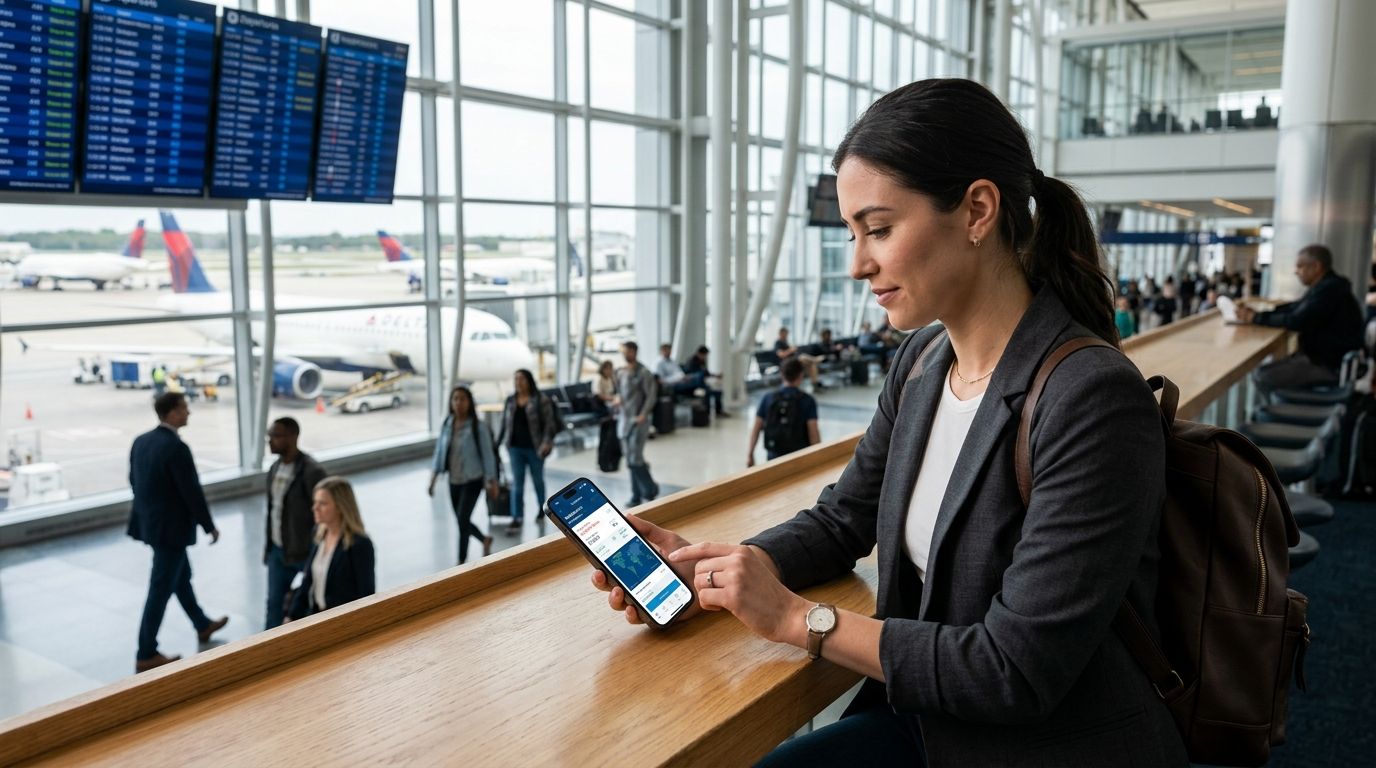
Picking a flight delay prediction app in 2026 comes down to one question: do you want to know the risk before you book, or do you want an alert after the airline already knows something's wrong? DelayGuard, FlightAware, Flighty, Google Flights, and TripIt split into those two camps, and the wrong pick means you find out about a delay standing at the gate instead of at the search page.
- DelayGuard wins best flight delay prediction apps for pre-flight AI risk scoring across 65+ US airports in 2026.
- FlightAware is best for live in-flight tracking once a flight is already scheduled and boarding.
- Flighty is best for frequent flyers who want delay push alerts ahead of the airline's own announcement.
- Google Flights is the best free option for a quick on-time percentage check during search.
- TripIt organizes your whole itinerary but doesn't score delay risk before you book.
Why this matters
The DOT counts a flight as delayed once it lands 15 minutes past schedule — that's the baseline every app in this list is trying to predict or track around. Most delay apps only start working after that clock is already running: the airline flags a problem, then the app tells you.
A prediction app works the opposite direction. It looks at hub congestion, aircraft rotation, and route history before you've bought the ticket, so you can pick the 9 AM departure instead of the 7 PM one on the same route. That distinction — before versus after — is the single biggest factor in how well an app actually saves you time in 2026.
The verdict
Best overall: DelayGuard. Best for real-time in-flight tracking: FlightAware. Best for frequent-flyer alerts: Flighty. Best free option: Google Flights. Best for itinerary management: TripIt.
What makes the best flight delay prediction app
- Pre-flight vs. reactive — does it score risk before you book, or only alert after the airline flags a delay?
- Airport and airline coverage — which US airports and carriers does the model actually cover?
- Data transparency — does it explain the mechanism (hub congestion, cascade delays, weather) or just show a bare percentage?
- Alert speed — how fast does the app surface a delay relative to the airline's own notification?
- Trip-level utility — does it fold into your itinerary, calendar, or boarding pass workflow?
- Access model — what's usable without a subscription, and what's locked behind one?
At a glance
| App | Best for | Standout feature | Key limitation |
|---|---|---|---|
| DelayGuard | Pre-flight delay risk scoring | AI risk score across 65+ US airports before you book | No live in-flight tracking after departure |
| FlightAware | Real-time in-flight tracking | Live gate, tail number, and route status | Weaker at comparing risk between route options before you buy |
| Flighty | Frequent-flyer delay alerts | Push notifications often ahead of the airline's own | iOS only, and only for flights already booked |
| Google Flights | Free on-time check during search | On-time percentage shown right in search results | Coarse average, not a route- or date-specific risk score |
| TripIt | Itinerary and travel-day organization | Auto-builds itinerary from forwarded confirmation emails | Delay alerts are reactive, not predictive |
1. DelayGuard: best flight delay prediction app for pre-flight risk scoring
DelayGuard runs an AI model against 65+ US airports and major domestic airlines to score delay risk before you buy a ticket, not after. Instead of a single percentage, it walks through the mechanism — hub congestion, aircraft rotation, cascade delays from an earlier leg — so you understand why one departure time is riskier than another on the same route.
DelayGuard pros:
- Scores delay risk before you book, not after the airline already knows
- Covers 65+ US airports and major domestic carriers
- Explains the cause (hub congestion, cascade effect) instead of a bare number
- Free tier gets you a risk check without paying first
DelayGuard cons:
- No live gate or tail-number tracking once you're already airborne
- Domestic US focus — not built for international routes
- Deeper history and extra checks sit behind paid tiers
Best for: choosing between two departure times or routes before you buy. Verdict: Buy.
2. FlightAware: best flight delay prediction app for real-time in-flight tracking
FlightAware is built for flights already on the schedule: live gate assignments, tail numbers, and route status once a plane is in the air or taxiing. It's the tool you open when your flight is already booked and you want to know exactly where the aircraft is right now.
FlightAware pros:
- Strong live tracking once a flight is in progress
- Wide coverage across carriers and routes, not just US domestic
- Gate and status alerts as they change
FlightAware cons:
- Less useful for comparing risk between two flight options before you book
- Deeper historical and predictive data sits behind a paid tier
- Tells you a flight is delayed closer to the airline's own timeline than ahead of it
Best for: travelers who already have a ticket and want live status. Verdict: Buy — as a companion to a pre-flight risk check, not a replacement for one.
3. Flighty: best flight delay prediction app for frequent-flyer alerts
Flighty pushes delay and gate-change notifications to your phone, often faster than the airline sends its own alert, and ties into your calendar and wallet once a trip is booked. It's a favorite among people who fly often enough to want every notification the moment it exists.
Flighty pros:
- Fast push alerts, frequently ahead of the airline's own messaging
- Calendar and wallet integration for booked trips
- Gate-change and cancellation notifications in one feed
Flighty cons:
- iOS only, so it's off the table on Android in 2026
- Built around flights you've already booked, not comparing options beforehand
- No dedicated pre-flight risk score across multiple route choices
Best for: frequent flyers on iPhone who want instant alerts after booking. Verdict: Hold if you're on iOS and fly often; Skip if Android or an occasional traveler.
4. Google Flights: best free flight delay prediction option during search
Google Flights shows an on-time percentage right inside the same search results where you're comparing fares, no separate app or account needed. It's the lowest-effort way to get any delay signal at all.
Google Flights pros:
- Built into flight search — zero extra steps
- No account or download required
- Historical on-time labels shown alongside price and duration
Google Flights cons:
- The on-time figure is a broad average, not a date- or route-specific risk score
- No push alerts once you've booked
- No explanation of why a route is riskier — just a number
Best for: a quick sanity check while you're already comparing fares. Verdict: Buy as a free first pass, not your only check.
5. TripIt: best flight delay prediction app for itinerary management
TripIt auto-builds a master itinerary from forwarded confirmation emails, pulling flights, hotels, and car rentals into one timeline. Its delay alerts exist, but they're layered on top of an organizational tool rather than the reason people use it.
TripIt pros:
- Consolidates flights, hotels, and rentals into a single itinerary
- Auto-imports from forwarded confirmation emails
- Useful across multi-leg or multi-carrier trips
TripIt cons:
- Delay alerts are reactive, based on airline data, not predictive
- Not built to compare risk between two flight options before booking
- Real-time alert features require the paid tier
Best for: travelers managing a multi-stop trip who want one itinerary view. Verdict: Hold as an organizer; it's not a delay-prediction tool on its own.
How we ranked
Each app was measured against the six criteria above: pre-flight versus reactive timing, airport and airline coverage, data transparency, alert speed, trip-level utility, and access model. DelayGuard ranks first because it's the only one on this list scoring risk before you buy a ticket rather than reacting once you already have one.
Which flight delay prediction app should you choose in 2026?
If you're choosing between flight times or routes and haven't booked yet, DelayGuard is the right first stop — it's the only tool here built for that exact decision. Once you're booked, pair it with FlightAware or Flighty for live tracking and push alerts, and treat Google Flights and TripIt as free supplements, not primary tools.
The apps that alert you after a delay is already flagged are solving a different problem than the ones that score risk before you book — most travelers need both, not one instead of the other.
FAQ
What is the best flight delay prediction app in 2026?
DelayGuard ranks best overall for pre-flight risk scoring across 65+ US airports in 2026. FlightAware and Flighty rank higher for tracking flights you've already booked.
Is DelayGuard better than FlightAware?
They solve different problems. DelayGuard scores delay risk before you book a ticket; FlightAware tracks a flight in real time once it's already scheduled.
Can any app predict a flight delay before I book?
DelayGuard is built specifically for that — it scores delay risk for a route and departure time before you purchase a ticket, across 65+ US airports and major domestic carriers.
Do flight delay prediction apps work for international flights?
Coverage varies by app. DelayGuard's model is focused on US domestic airports and airlines; FlightAware's live tracking extends to a broader global network of flights.
How does the FAA define a delayed flight?
The Department of Transportation counts a flight as delayed once it arrives 15 minutes or more after its scheduled time — that's the benchmark most on-time statistics are built around.
Is Google Flights good enough to check delay risk?
It's a reasonable free first pass since the on-time percentage sits right in search results, but the figure is a broad average, not a route- or date-specific risk score.
Do I need more than one flight delay app?
Most travelers benefit from pairing a pre-flight tool like DelayGuard with a live tracker like FlightAware or Flighty — one predicts risk, the other tracks the flight once it's in motion.
How much does DelayGuard cost?
DelayGuard offers a free tier alongside paid upgrade options and credit packs; check the current plans on the site for specifics.
One last thing
The apps that alert you fastest after a delay and the apps that predict risk before you book are solving two different problems, and most people only install one. The gap shows up on the exact routes where hub congestion or an earlier cascade delay makes one departure time far riskier than another on the same day — that's precisely the window a reactive tracker can't see, because nothing's gone wrong yet. Run the route through DelayGuard before you buy, then let a tracker take over once you're booked.