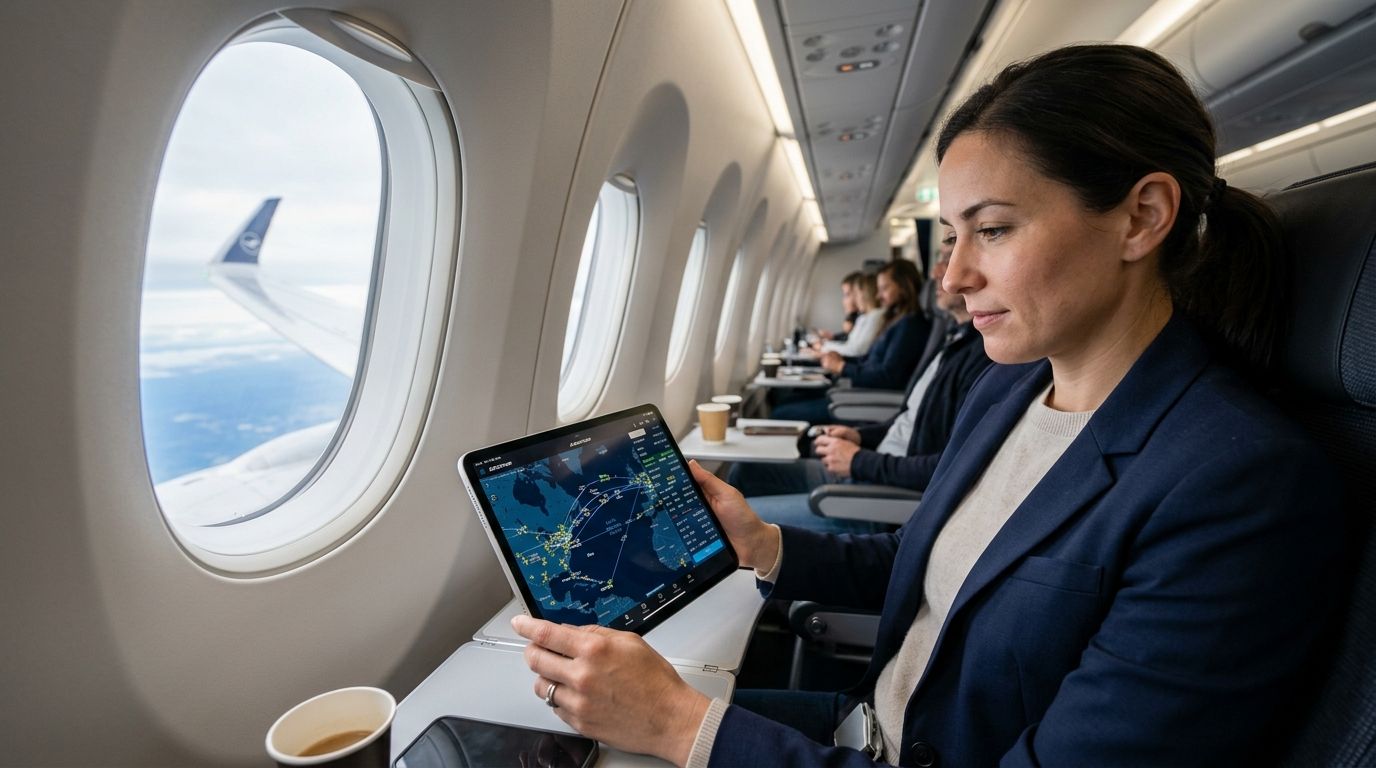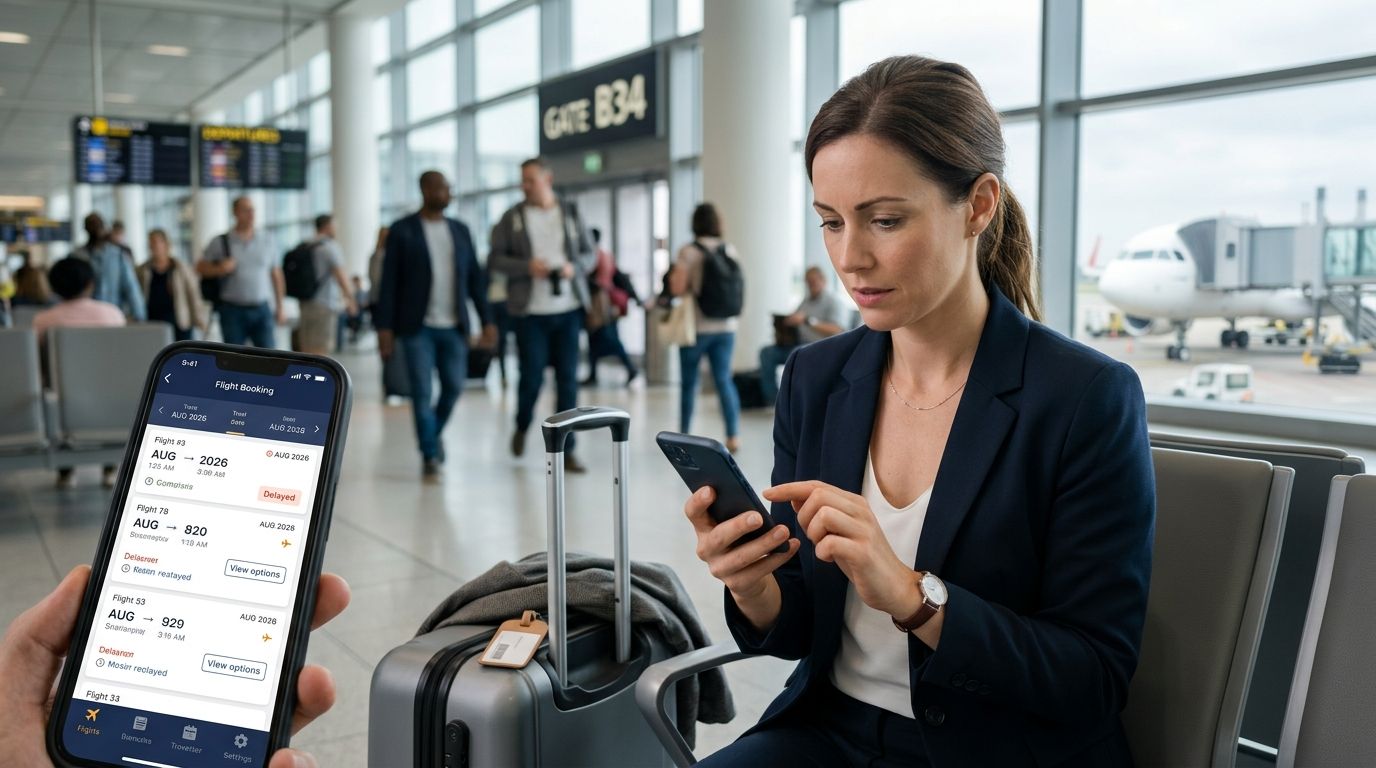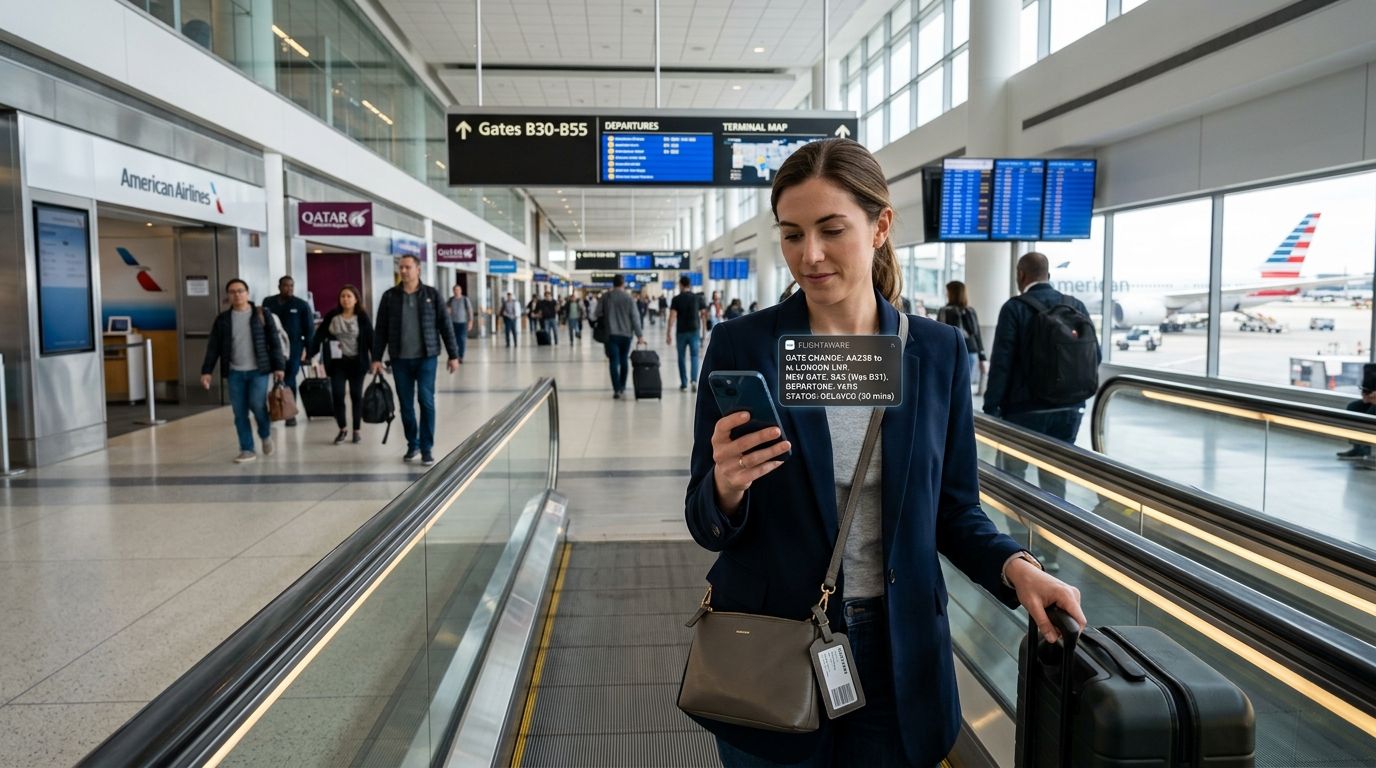
Gate changes and delay alerts don't do the same job. One tells you the flight moved to a different gate 25 minutes before boarding; the other tells you, days in advance, that your 6:15 PM departure out of a congested hub has a real shot at sitting on the tarmac. Picking the wrong app for the job means you find out too late either way. Here's how six apps stack up for 2026, including which ones catch a gate swap in real time and which one flags delay risk before you even book.
- Flighty wins overall for real-time gate change and delay alerts in 2026, thanks to fast push notifications.
- DelayGuard is the best app for predicting delay risk before you fly, covering 65+ US airports.
- FlightAware is the best free app for live tracking across any airline, no account required.
- TripIt consolidates multi-airline itineraries into one alert feed; App in the Air suits frequent flyers tracking miles.
- Airline native apps still win for official rebooking, but lag on early gate-change notifications.
Why this matters
A gate change alert and a delay prediction solve two different problems. The alert tells you what already happened at the airport — the flight moved to C14 instead of B22, or ATC pushed the departure back 40 minutes. A delay prediction tells you what's likely to happen before you've even packed, based on how that route, airline, and hub have behaved historically.
Most travelers only think about the first kind of app, then get burned by a 9 PM flight out of a chronically backed-up hub they never checked in advance. The Department of Transportation counts a flight as delayed once it arrives 15 minutes or more past its scheduled time — that's the number every tracking app is racing to alert you about. The apps below split into two camps: real-time trackers that catch changes as they happen, and prediction tools that tell you the odds before you book.
What makes the best gate change and delay alert app
- Push notification speed — how fast the app surfaces a gate or time change after the airline or FAA feed updates
- Airport and airline coverage — whether it works for regional carriers and secondary airports, not just the majors
- Pre-departure prediction vs. live tracking — some apps only tell you what already happened; others estimate risk before departure
- Data source quality — ADS-B and FAA/airline feeds are more reliable than crowdsourced reports
- Boarding pass and wallet integration — one less app to open at the gate
- Free tier usefulness — whether the no-cost version actually covers your route or just teases the paid one
Gate change and delay apps at a glance
| App | Best for | Standout feature | Key limitation |
|---|---|---|---|
| DelayGuard | Predicting delay risk before you fly | Route-level risk scoring across 65+ US airports | Doesn't push live gate-change alerts during travel |
| Flighty | Real-time gate change push notifications | Fast alerts sourced from ADS-B and airline feeds | Full alert coverage requires a subscription |
| FlightAware | Free live tracking across any airline | No account needed for basic flight tracking | Fewer predictive features than dedicated risk tools |
| TripIt | Consolidating itineraries across bookings | Auto-builds a trip from forwarded confirmation emails | Alert speed depends on the airline's own data feed |
| App in the Air | Frequent flyers tracking multiple trips | Tracks miles and multiple trips in one dashboard | Smaller airport coverage than the big three trackers |
| Airline native apps | Official rebooking and boarding pass alerts | Direct line to the airline's own rebooking system | Only tracks flights booked on that one airline |
1. DelayGuard: best app for predicting delay risk before you fly
DelayGuard scores delay risk for a specific route, airline, and time slot across 65+ US airports before you book or board, using patterns in how that combination has historically performed. It's built for the decision you make days ahead — not the scramble at the gate.
DelayGuard pros:
- Route-level risk scoring instead of a generic on-time percentage
- Covers 65+ US airports and major domestic carriers
- Useful before you've even chosen a flight, not just after you've booked one
DelayGuard cons:
- Not built for real-time gate-change push alerts once you're already at the airport
- Prediction accuracy depends on how much historical data exists for a given route
DelayGuard verdict: Buy if you want to know the odds before you book. Pair it with a real-time tracker like Flighty or FlightAware for the day of travel.
2. Flighty: best app for real-time gate change push notifications
Flighty pulls from ADS-B tracking and airline data feeds to push gate and time changes as soon as they're logged, which is why it's become the default for travelers who want to know before the gate agent announces it.
Flighty pros:
- Fast, reliable gate and delay push notifications
- Clean live map showing the actual aircraft in flight
- Works across major US carriers without airline-specific limitations
Flighty cons:
- The deepest alert features sit behind a subscription
- No pre-departure risk scoring — it tells you what's happening, not what's likely
Flighty verdict: Buy if real-time alerts during travel are your main use case.
3. FlightAware: best free app for live flight tracking across any airline
FlightAware has tracked commercial flights for years using FAA and ADS-B data, and its free tier still covers basic status and gate information for nearly any US flight without requiring an account.
FlightAware pros:
- Free tier covers live status for almost any commercial flight
- No account required to look up a single flight
- Long track record of data reliability from FAA feeds
FlightAware cons:
- Predictive features are lighter than dedicated risk-scoring tools
- Interface leans utilitarian compared to newer apps
FlightAware verdict: Buy if you want free, no-friction tracking and don't need pre-departure prediction.
4. TripIt: best app for consolidating itineraries across multiple bookings
TripIt builds a single itinerary by pulling flight, hotel, and car rental confirmations from your inbox, which matters most when you're juggling connections booked through different airlines or a travel agent.
TripIt pros:
- Consolidates every leg of a multi-airline trip into one timeline
- Useful for travelers who book connections separately rather than on one ticket
- Syncs with calendar apps for a full trip view
TripIt cons:
- Alert timing depends on how fast the underlying airline feed updates
- Setup requires forwarding confirmation emails, which adds a step
TripIt verdict: Hold if you only fly single-airline round trips; buy if you regularly stitch together separate bookings.
5. App in the Air: best app for frequent flyers tracking multiple trips
App in the Air is built around travelers juggling several trips a month, combining flight tracking with mileage and status tracking across airlines and alliances.
App in the Air pros:
- Tracks miles and elite status alongside flight status
- Handles multiple simultaneous trips cleanly
- Useful for road warriors managing several bookings at once
App in the Air cons:
- Airport and airline coverage is narrower than FlightAware or Flighty
- Less focused on single-trip gate-change speed
App in the Air verdict: Buy if you fly often enough that mileage tracking matters as much as gate alerts; skip if you fly a handful of times a year.
6. Airline native apps: best for official rebooking and boarding pass alerts
The airline's own app — United, Delta, American, and the rest — remains the fastest path to an official rebooking once a delay actually happens, since it's connected directly to that carrier's operations system.
Airline app pros:
- Direct rebooking through the airline that controls your seat
- Boarding pass and mobile wallet integration built in
- Gate alerts come straight from the source, no third-party lag
Airline app cons:
- Only useful for flights booked on that specific airline
- No predictive view of delay risk before you book
Airline app verdict: Buy as a companion app for the carrier you fly most, not as your only tracking tool.
How we ranked
Each app was weighed against the six criteria above — notification speed, coverage, prediction versus live tracking, data source quality, wallet integration, and free-tier usefulness. No single app wins on all six, which is why the list splits by use case instead of naming one universal winner.
Check your flight's delay risk
See route-level delay odds across 65+ US airports before you book.
Which gate change and delay alert app should you choose?
If you want to know the odds before you book a flight, DelayGuard is the pick — it's the only tool here scoring delay risk ahead of time across 65+ US airports. If you're already booked and want the fastest real-time gate and delay alerts, Flighty is the strongest overall choice for 2026, and FlightAware remains the best free option if you don't want another subscription. For a full breakdown of how live flight tracking and status apps compare beyond gate alerts, or how to handle connecting flight delay risk specifically, both get their own dedicated breakdowns.
Most frequent travelers end up running two apps at once: one for prediction before departure, one for real-time alerts during travel. That combination beats relying on any single app for both jobs.
FAQ
What's the best app for real-time gate change alerts in 2026?
Flighty is the best app for real-time gate change alerts in 2026, pushing notifications as soon as ADS-B or airline feeds register a change. FlightAware is the strongest free alternative for the same job.
Is DelayGuard better than Flighty for flight delays?
They solve different problems. DelayGuard predicts delay risk before you book across 65+ US airports, while Flighty sends real-time alerts once you're already booked and traveling.
How much does a flight tracking app cost?
Most flight tracking apps offer a free tier with basic status alerts, with deeper features like predictive risk scoring or unlimited real-time notifications available on paid tiers. Check each app's current pricing directly, since it changes.
Can an app predict a flight delay before it happens?
Yes. Apps like DelayGuard use historical route, airline, and airport patterns to score delay risk before departure, rather than only reporting changes as they happen.
Do airline apps send gate change alerts?
Airline native apps send gate and delay alerts for flights booked directly with that carrier, and they're often the fastest source for official rebooking. They don't track flights booked on other airlines.
What counts as a delayed flight?
The US Department of Transportation counts a flight as delayed once it arrives 15 minutes or more after its scheduled time. That threshold is what most tracking apps are alerting you about.
Which app is best for tracking connecting flights?
Apps built around itinerary consolidation, like TripIt, or dedicated connection-risk tools handle multi-leg trips better than single-flight trackers, since they account for layover timing across carriers.
Do I need more than one flight alert app?
Most frequent travelers run a prediction tool like DelayGuard before booking and a real-time tracker like Flighty or FlightAware during travel, since no single app covers both jobs well.
One last thing
The apps that catch a gate change fastest are the ones plugged into ADS-B or direct airline feeds, not crowdsourced reports — that's the real difference between an alert 35 minutes early and one after you've already missed the announcement. Check delay risk before you book, then let a real-time tracker handle the day of travel.