Some airports run on time because of geography and hub design, not luck. This ranks the best US airports for on-time flights in 2026 using the same delay-driver factors DelayGuard's risk model tracks daily: airspace congestion, cascade exposure, and which carrier dominates the gates.
- Honolulu, Salt Lake City, and Seattle-Tacoma rank among the best US airports for on-time flights in 2026.
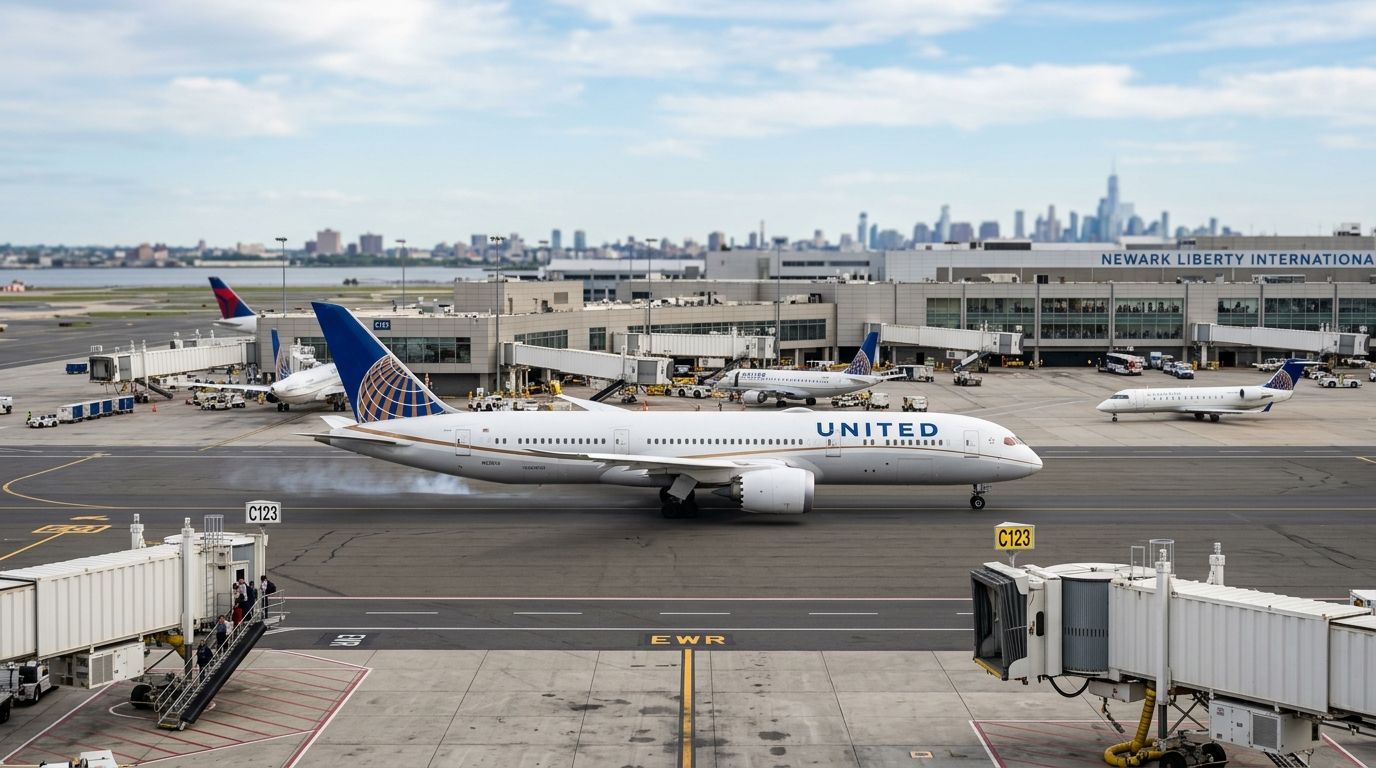
- Newark, LaGuardia, and Philadelphia delay 26%, 24%, and 22% of flights — the structural opposite of the top performers.
- Single-carrier hubs with uncongested airspace consistently outperform shared Northeast corridor airports.
- Flights before 8am average 11% delayed nationwide; after 8pm that climbs to 33%.
- DelayGuard checks delay risk for a specific flight across 65+ US airports, regardless of how the airport ranks overall.
Why this matters
An airport's on-time record isn't random. It's a function of how many carriers compete for the same runways, how close the approach corridor sits to other busy airports, and how much weather exposure the region carries through winter and summer. Newark, LaGuardia, and Philadelphia share congested Northeast airspace and delay 26%, 24%, and 22% of flights respectively — the same structural problem shows up at each one. Check your flight's delay risk on DelayGuard before you book, because even the best airport on this list still has a bad-weather week.
Picking a connection through a reliable airport cuts your exposure to cascade delays — the chain reaction where one late inbound aircraft pushes back every downstream flight that plane is scheduled to fly. Isolated or single-carrier hubs break that chain more often than crowded multi-carrier corridors do.
What makes the best airport for on-time flights
- Single dominant carrier — fewer competing schedule banks fighting for the same gates and runways
- Uncongested regional airspace — no overlapping approach corridor with another major hub nearby
- Low weather exposure — few fog, snow, or thunderstorm days per year
- Runway capacity matched to traffic — no queuing backlog during peak departure banks
- Minimal cascade-delay risk — isolated geography or short connecting banks that don't compound
- Track record above the national average, not a single good month
At a glance
| Airport | Best for | Standout structural feature | Key limitation |
|---|---|---|---|
| Honolulu International (HNL) | Trans-Pacific and interisland travel | Isolated geography, no upstream cascade risk | Limited backup options if one carrier's schedule slips |
| Salt Lake City International (SLC) | Mountain West connections | Single-carrier hub, wide runway spacing | Winter storms can still stack delays December through February |
| Minneapolis-St Paul International (MSP) | Midwest connections | Delta hub with minimal shared airspace conflicts | Severe winter weather is a recurring risk factor |
| Seattle-Tacoma International (SEA) | Pacific Northwest and Alaska routes | Home base of one of the two most reliable major carriers | Fog and low ceilings during fall mornings |
| San Diego International (SAN) | Short-haul West Coast trips | Point-to-point airport, no connecting-bank congestion | Curfew restrictions limit late-night schedule recovery |
1. Honolulu International (HNL): best for trans-Pacific and interisland travel
Honolulu sits at the end of long over-water routes with no shared airspace to fight through on approach. It's dominated by Hawaiian Airlines, which DelayGuard's carrier reliability analysis places among the most on-time major US airlines in 2026, alongside Alaska.
Honolulu pros:
- No upstream cascade risk from nearby congested hubs
- Dominant carrier keeps schedule banks predictable
- Weather delays are rare outside occasional tropical systems
Honolulu cons:
- Fewer alternate flights if a delay does hit, since one carrier controls most of the schedule
- Long-haul inbound delays from the mainland still ripple into Hawaiian's connecting bank
Best for: travelers connecting to interisland flights or booking trans-Pacific routes who want the lowest cascade exposure on the list.
Verdict: route through with confidence — the geography does the work for you.
2. Salt Lake City International (SLC): best for Mountain West connections
Salt Lake City is a Delta hub built with enough runway spacing that peak departure banks rarely queue. It sits away from the coastal weather systems that hit Seattle or the Northeast corridor.
Salt Lake City pros:
- Single dominant carrier reduces gate and runway conflicts
- Runway layout handles peak-bank volume without backlog
- Dry climate limits fog and thunderstorm delay days
Salt Lake City cons:
- Winter storms rolling off the Wasatch range still stack delays December through February
- Heavy reliance on one carrier's schedule means a single mechanical or crew issue ripples wide
Best for: connecting through the Mountain West on Delta's schedule bank.
Verdict: route through with confidence outside peak winter storm weeks.
3. Minneapolis-St Paul International (MSP): best for Midwest connections
MSP runs as a Delta hub with minimal overlap into neighboring hub airspace, which keeps ground delays from compounding the way they do in the Northeast corridor.
Minneapolis-St Paul pros:
- Single-carrier dominance limits competing schedule banks
- Airspace doesn't overlap with Chicago's or Detroit's congestion
- Efficient de-icing infrastructure built for high snow volume
Minneapolis-St Paul cons:
- Severe winter weather is a recurring, not occasional, risk factor here
- Connecting banks are tight, so one late inbound flight can still cascade
Best for: Midwest travelers connecting on Delta who can build in a buffer during winter months.
Verdict: route through with confidence April through October; add a buffer in winter.
4. Seattle-Tacoma International (SEA): best for Pacific Northwest and Alaska routes
Seattle-Tacoma is Alaska Airlines' home base — one of the two carriers DelayGuard's reliability analysis found leads the industry, alongside Hawaiian. That carrier concentration keeps scheduling predictable even during a busy connecting bank.
Seattle-Tacoma pros:
- Anchored by one of the two most reliable major US carriers
- Airspace doesn't share a congested corridor with another major hub
- Consistent schedule banks reduce misconnect risk
Seattle-Tacoma cons:
- Fall mornings bring fog and low ceilings that ground-stop arrivals
- Growing international traffic is adding volume to a layout not originally built for it
Best for: Pacific Northwest and Alaska-bound travelers flying Alaska Airlines' primary hub.
Verdict: route through with confidence outside fall fog season.
5. San Diego International (SAN): best for short-haul West Coast trips
SAN is a point-to-point airport, not a connecting hub, which removes the cascade-delay mechanism entirely for most passengers. There's no bank of tight connections waiting on a late inbound aircraft.
San Diego pros:
- No connecting-bank congestion since most passengers start or end their trip here
- Single-runway simplicity keeps ground operations predictable
- Mild coastal climate limits weather delay days
San Diego cons:
- A nighttime noise curfew limits how late flights can operate, so evening delays have less room to recover
- Limited long-haul international service compared to larger hubs
Best for: short-haul West Coast trips where you're not connecting to anything else.
Verdict: route through with confidence, but avoid the last flight of the day given the curfew.
How we ranked
Each airport was scored against the criteria above: carrier concentration, airspace congestion, weather exposure, runway capacity, and cascade-delay risk. The same factors explain why Newark, LaGuardia, and Philadelphia land at the bottom nationally — they share the same congested Northeast corridor and delay 26%, 24%, and 22% of flights. If you're comparing specific tools that model these factors flight-by-flight, DelayGuard's flight delay prediction apps comparison breaks down how different services score risk.
Which airport should you choose?
If you're connecting through the Mountain West or Midwest, Salt Lake City or Minneapolis-St Paul wins on carrier concentration outside winter storm season. If you're island-bound or trans-Pacific, Honolulu wins on isolation from cascade risk. If you're just flying point-to-point on the West Coast, San Diego wins on having no connecting bank to fail in the first place. None of that replaces checking the specific flight — a reliable airport with a bad-weather day still delays 30%+ of its schedule, and time of day matters as much as airport choice: flights before 8am average 11% delayed nationwide, while flights after 8pm average 33%.
Check your flight's delay risk
See the risk score for your exact route and airport before you book.
FAQ
What are the best US airports for on-time flights in 2026?
Honolulu, Salt Lake City, Minneapolis-St Paul, Seattle-Tacoma, and San Diego rank among the best US airports for on-time flights in 2026 based on carrier concentration, airspace congestion, and cascade-delay exposure. Each wins for a different use case rather than one outright best.
Which US airport has the worst on-time record?
Newark delays 26% of flights, the worst rate among major US airports in 2026, followed by LaGuardia at 24% and Philadelphia at 22%. All three share the same congested Northeast corridor airspace.
Do morning flights have fewer delays than evening flights?
Yes. Flights before 8am average 11% delayed nationwide, compared to 33% for flights after 8pm. Delays accumulate through the day as late aircraft push back every downstream departure.
Which airlines have the best on-time performance in 2026?
Hawaiian and Alaska lead major US carriers on reliability, while Spirit and Frontier lag far behind. Hub geography and how aggressively each airline schedules its aircraft explain most of the gap.
Is Honolulu airport reliable for connections?
Yes. Honolulu's isolated geography means it doesn't share congested airspace with another major hub, which removes most of the cascade-delay risk that hits Northeast corridor airports.
Does airport size affect delay rates?
Not directly — carrier concentration and airspace congestion matter more than size. A large single-carrier hub like Salt Lake City often outperforms a smaller airport that shares airspace with a congested neighbor.
How can I check my own flight's delay risk before I fly?
DelayGuard models delay risk for specific flights across 65+ US airports and major domestic airlines, factoring in route, time of day, and airline history rather than relying on the airport's overall ranking alone.
Are winter months worse for on-time performance at Northern hubs?
Yes. Salt Lake City and Minneapolis-St Paul both see delay risk climb from December through February, even though both rank well the rest of the year.
One last thing
Airport choice only explains part of the picture. Time of day carries nearly as much weight — an 11% delay rate before 8am versus 33% after 8pm means booking the first flight of the day through a mediocre airport can beat a late flight through Honolulu. Stack both factors when you can: best airport, first departure bank of the day.